

Imagine you are a successful engineer who has been promoted to a management role. You are offered training in technical management skills like budgeting and using the in-house software systems. But you quickly realise these skills are not enough to help you deal with the messy and unpredictable problems that you face as a leader. You need a different approach that helps you understand and respond to the human and social aspects of your organisation and its operating context.
This is what happened to Peter Checkland in the 1970s. He realised he needed to develop his soft rather than technical skills to be an effective organisational leader and developed soft systems methodology (SSM) so he could deal with complex and ill-defined situations.
Fast forward to today, and the issues facing leaders are as complex and hard to define as ever.
The 2024 Global Risks Report, developed by the World Economic Forum (WEF), identifies the most pressing short and long-term structural forces shaping risk across the globe as:
- Misinformation and disinformation – think deep fakes, cybercrime, and questionable ethics.
- Climate-related threats – with extreme weather events on the rise.
- Societal polarisation and economic uncertainty – leading to destabilisation.
- Geostrategic shifts – characterised by population ageing, increasing urbanisation, and the reshaping of global geopolitical power balances.
Responding to these risks at an organisational level requires leaders to adopt a proactive and adaptive approach to managing uncertainty and complexity. The WEF Report highlights the need to build resilience across multiple dimensions, such as governance, operations, finance, and culture. It also urges leaders to engage in multi-stakeholder collaboration and innovation to address the systemic and interrelated nature of these risks.
However, it’s worth asking: are your organisation’s leaders equipped with the skills to respond to these challenges, or are they still stuck in the past, relying on what worked before?
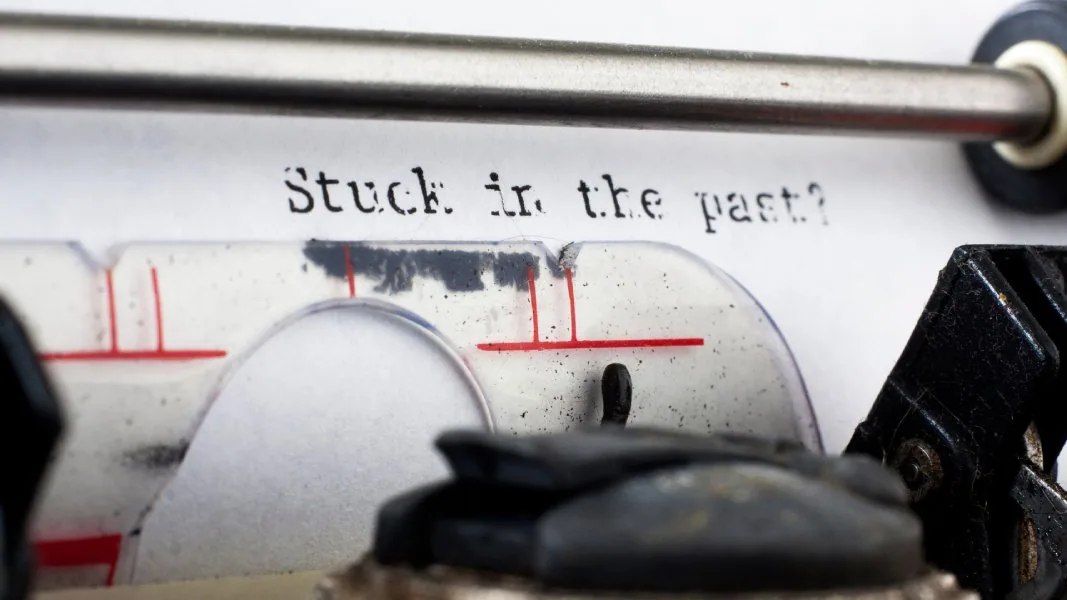
Not challenging leaders to hone critical soft skills can give them a false sense of security and competence.
Leaders whose confidence is based on their past successes will think they have the tools and the knowledge to deal with any situation when, in fact, they may not.
That’s like training people to read an out-of-date map when they need a compass to find their way because the landscape has changed.
Worse, those leaders could prevent their teams from learning and adapting to new and emerging challenges by insisting on using approaches well past their use-by date.
That’s why it is essential for people leading organisations to lead others through change, uncertainty, and unpredictability as well as cope with it personally.
They need to know how to lead authentically and empathetically, understand how to navigate complexity, and find opportunities amidst ambiguity and uncertainty.
That requires creative, critical, and systemic thinking and the ability to collaborate across boundaries, cultures, and disciplines.

However, when budgets are under pressure and the economy is uncertain, there’s a tendency to focus the people development budget on the same technical skills that Checkland found so frustrating.
During a session about reskilling and the future of work at Davos 2024, Denis Machuel, Chief Executive Officer from the Adecco Group AG, said “One thing to have in mind, particularly with the GenAl revolution, is the equal investment that is required in tech and in people. And usually, when you talk about GenAl, we talk about, you know, there’s so many millions, or dozens of millions, to put in tech. Well, you should put the same money, the same amount of money, in the way we are preparing the people.”
If under-investment in people feels familiar, you could begin by considering which of the following categories of soft skills prioritised in the WEF Future of Jobs 2023 Report are a development priority in your workplace:
- Cognitive skills that enable complex problem-solving and creative thinking to find innovative solutions.
- Self-efficacy skills like resilience, flexibility, and agility so leaders can adapt to rapidly changing work environments.
- Socio-emotional skills like curiosity, lifelong learning, and the ability to maintain motivation and self-awareness.
- Working with others skills like empathy, active listening, leading collaboration and influencing for outcomes.
To take the next right step you need to get a better handle on your current context.
Rich pictures, a tool from Checkland’s SSM, are a useful tool for interpreting your current context. If you want to learn more about drawing and interpreting a rich picture for your complex work or personal situation, this Free Mini-Course may be useful.
Or, if you’re interested in a tailored masterclass for your executive team I’d love to chat.