



Skip to content
+61 412 181 635

Strategic Facilitation

Your highest-stakes, most politically loaded situations worked through live, in the room. Watch a divided board or executive team move from stalemate to a direction they're ready to act on.

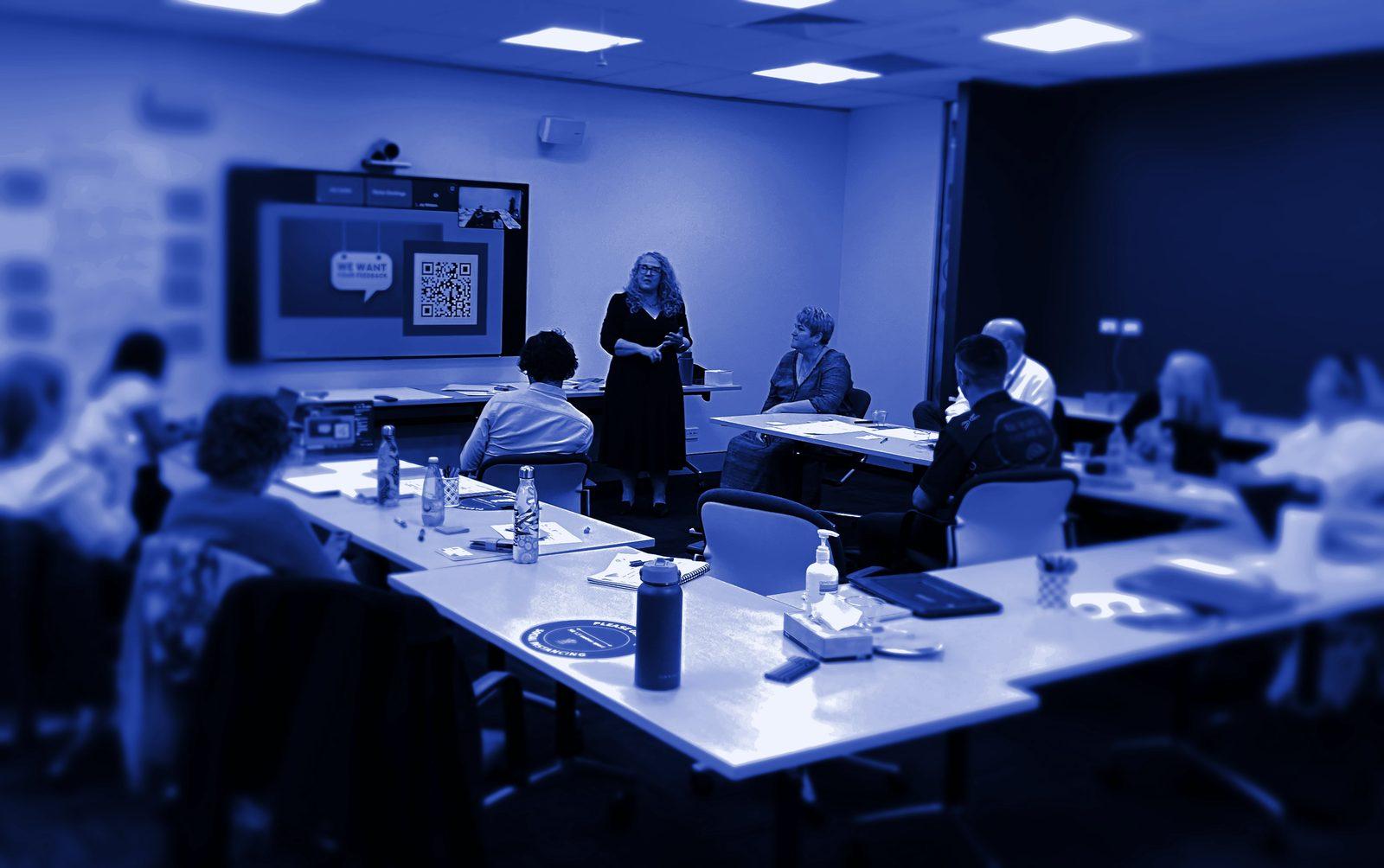
Susanne facilitating a strategy session, participants working at tables around the room
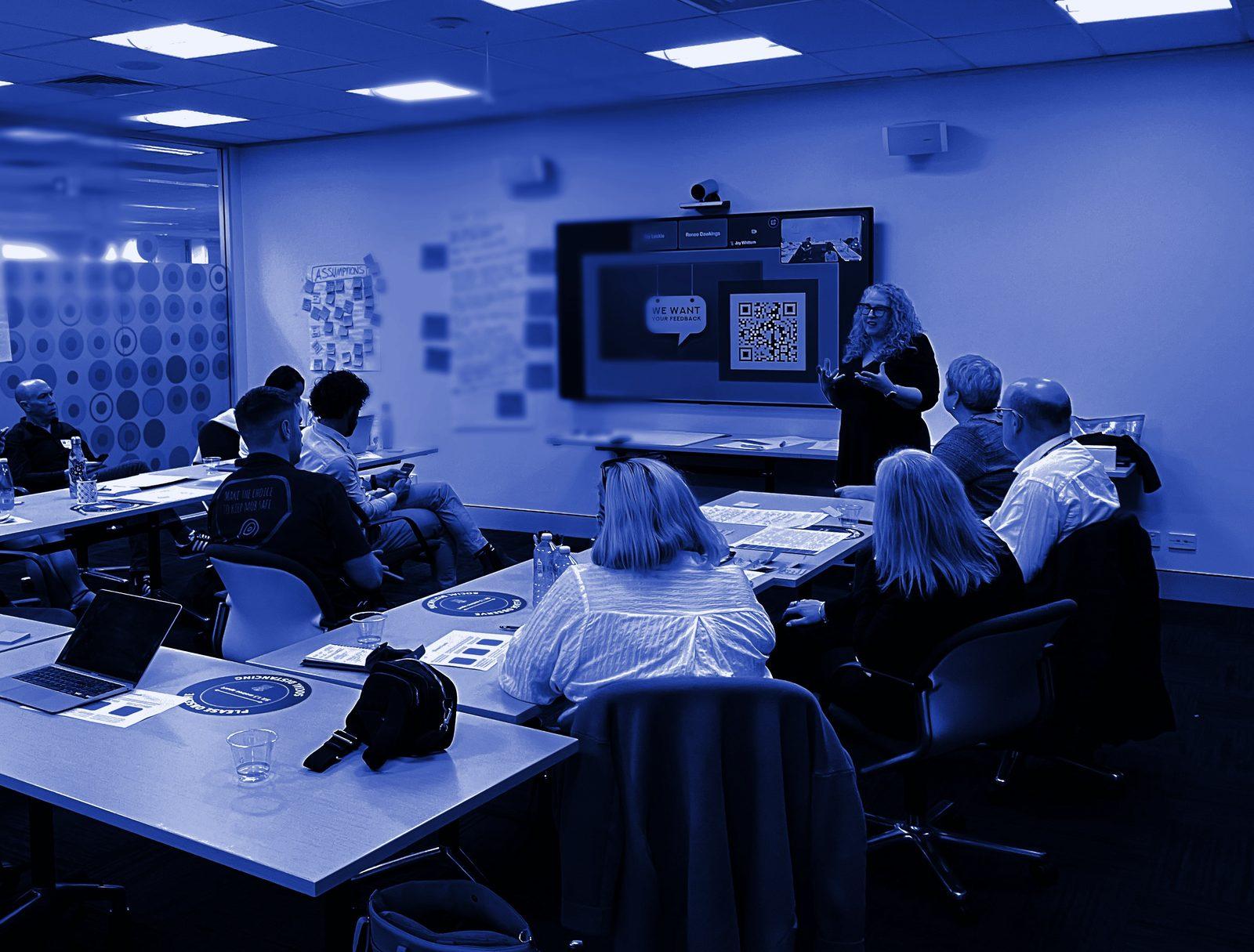
A working session in progress, walls of sticky notes behind the group

Most boards and executive teams already know what the hard question is. What they do not have is a setting where it can go on the table and be worked through without the day falling apart. The question gets deferred, the agenda fills with operational detail, and everyone leaves with a version of the plan they can live with and nobody owns.

Susanne is in the room for the day, holding the process and reading the group as it goes. She says the true, necessary thing out loud and stays with the substance without taking sides. When the plan for the day stops working, she changes it to get an outcome, and where there is time she checks with you first.

The direction is the group's to set. Susanne does not set it for them, and she does not paper over an agreement that is not there. Where the group cannot land it, she puts the options and the trade-offs side by side so the decision can be taken by the people whose decision it is.

It suits boards setting direction for the next period, executive teams whose previous plan has run its course, and groups that have stopped agreeing with each other. Groups have run from three people to several hundred, in person, virtual or hybrid.

How an engagement runs

  1. A project brief, where Susanne asks what the outcome needs to be, what the context is and where the sensitivities sit.
  2. Discovery before the day where the design needs it: conversations with the people who will be in the room, a scan of the operating conditions, or an assessment.
  3. A draft design to test, then refine.
  4. The session itself.
  5. An outputs pack, then a debrief.

The outputs pack holds the raw record: photographs of what the room produced, the online responses, the group reports back. Keeping it raw stops one person's reading of the day becoming the record of it. A synthesis, a communique or a written report can be built on top of that when you want one.

The game plan through

Every room is different, so there's no fixed formula. But underneath the tools and frameworks, Susanne works the same four moves, whether she's in a boardroom, on a stage, or in a room full of people who've stopped agreeing with each other.

  1. 01

    READ the field

    Before the engagement begins, Susanne finds out what's really going on beneath the agenda. On the day, she reads the room live.

  2. 02

    NAME the play

    Susanne takes a clear view and says the true, necessary thing out loud, staying true to the substance without taking sides.

  3. 03

    FIND the way through

    She'll get the room imagining what's possible, then ground it in what's real, mapping a route that can flex as conditions change.

  4. 04

    MOVE as one

    With the collective behind the decision, you'll be able to keep things moving long after Susanne's gone.

Client results

ADA Australia

“With Susanne we get an outcome, we move forward, we learn. We usually come away with a game plan, knowing where we're going and why we're going there.”

Geoff RoweChief Executive Officer, ADA Australia
State of play
ADA had been growing fast for several years, and the leadership team was so busy keeping up that there was little time to look ahead. The previous plan had run its course. In a growing organisation, it's easy for the structure and direction to take shape around the people already there, rather than around what the organisation needs next.
The way through
Susanne started with the management structure, then the strategy, asking why things were done the way they were. The plan became a working document that goes to the board three times a year with what's working and what isn't, and the board now wants to see how each activity links to outcomes. Between sessions she stays close enough to push and question, without getting into the weeds.
Result
ADA Australia. Fifteen engagements across four years, starting with a review of the management structure. Geoff has since put Susanne's name forward to other organisations.


OPAN

“We thought we had to fix the tension in the network. Susanne very quickly said no, you're going to have to work with it, and use it as a strength. That was the light bulb moment.”

Craig Gear OAMChief Executive Officer, OPAN
State of play
OPAN is a national network with a peak body and nine independent member organisations. Each member has its own board and its own community. Together they need one national voice with government. That pull between independence and cohesion comes with the model. As external pressure built, it started to show up inside the network as tension.
The way through
Susanne spoke with members one to one to understand where each was coming from before they came into the room. Once there, she put the outside picture in front of them, including the parts that were hard to hear. She framed independence and cohesion as a polarity: both needed, and the tension between them something to work with.
Result
OPAN. An initial eight engagements in thirteen months. The board launched a four-year strategic plan and implementation game plan, and members have put people forward for a network-led strategic working group to put it into practice.

Find your way through.

If the complexity in your organisation isn't going anywhere, and you have less certainty than you'd like, that's ground Susanne has worked for thirty years.

Start with a conversation to find your team's way through.

“Susanne is unflappable. She just keeps moving forward, keeping everyone focused and everything on track.”

Rachael BowkerChief Executive Officer, Darwin Community Legal Service