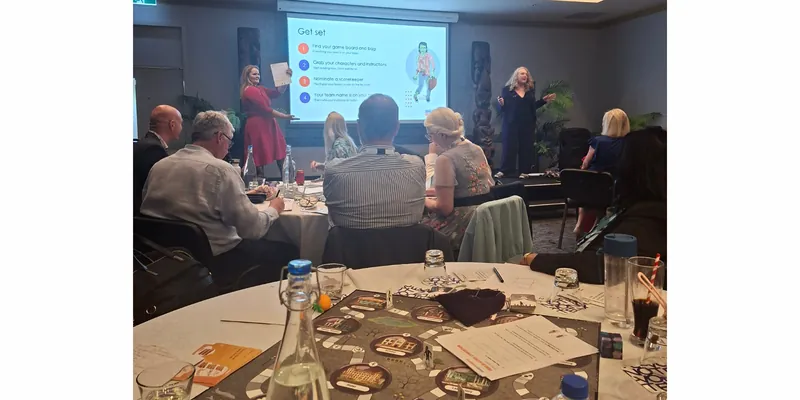


Recently, I was engaged as a facilitator for a summit on sustainability in the health system.
The experience made me reflect on my work over the years and the many teams I’ve worked with that were tasked with engaging different parts of highly complex systems to achieve positive change.
When reflecting, I noticed a couple of factors that can slow system-level change.
First, different actors within the system tend to wait for someone with recognised authority to establish a governance structure or authorising policy that tells them what they need to do and permits them to act.
Unfortunately, this often means early grassroots action struggles to gain traction and flourish, despite people at the coalface often having invaluable insights about the practicalities of implementing change locally.
Second, there is a tendency to tell negative stories or share data to scare people into taking action. It’s what we’ve come to expect from the media. If you’re old enough, you might remember the Grim Reaper advertisements aimed at scaring people into having safe sex.
Interestingly, during the 90s, Brazil took a very different approach to countries like South Africa, which was similarly challenged by rapidly increasing HIV infection rates. Instead of trying to scare people into having safe sex, Brazilian decision-makers decided to use humour in their public health campaigns. They realised that sexually aroused people tend to live in the moment rather than remember everything that could get in the way of a long life.
Many of their campaigns used humour to promote the idea that women would say yes to having sex if condoms were used. Obviously, this wasn’t the only strategy they used. Still, by adopting a more positive narrative and strategies that empowered people to exercise self-agency, they reduced their infection rate to one in 160 people by the beginning of the 2000s. Compare this to South Africa, whose infection rate at that time was one in four people testing positive for HIV.

One important source of agency is learning from the actions of others. Rather than scaring people into acting on climate mitigation and adaptation, sharing a wide variety of relatable stories of people taking positive action on climate change could help develop people’s agency for climate action while the formal authorising environment is being established. These stories could assist with shifting the view of climate change from activism to action-based, where people engage in taking action as members of a community, as professionals, and as citizens.
Sharing positive stories is useful for social marketing campaigns and for leaders on an individual level. The key to using stories to inspire change is to connect intellectually and emotionally with people.
Margaret Wheatley, a leadership expert and author, says, “Stories are the most powerful way we have of conveying the complexities of our world, and they help us connect with one another across boundaries of culture, time, and space.”
Personal stories, like those of Rosa Parks and the Montgomery Bus Boycott in the United States, helped personalise the struggles of African Americans and became a catalyst for meaningful and lasting change.
When leaders share compelling or relatable stories, they do more than convey information—they build bridges of trust and empathy among diverse stakeholders. The stories they share can create a shared sense of purpose by highlighting common goals and values, making it easier for people to see their role within the larger picture.
Remember that stories are like maps, helping us navigate the complex terrain of a situation. They provide landmarks and signposts that help us understand where we are and where we need to go. They help people see patterns and connections that may not be immediately apparent and can encourage experimentation, learning, and iteration.

The butterfly effect shows that starting small can create ripples that lead to significant, far-reaching impacts over time. Not sure where to start?
- Consider the context and the audience. This could involve adapting your language or tone to match the audience or tailoring your story to address specific concerns or challenges they may face.
- Start with a clear message. It should be focused, concise, and capture what you’re trying to communicate.
- Use concrete details. Make your story more vivid and memorable by using details that help the audience visualise what you’re describing. This could include specific examples, anecdotes, or visual imagery.
- Connect with emotions. Connect with the audience’s emotions by sharing personal experiences, expressing vulnerability, or using humour to lighten the mood.
How could you use a story today to influence positive change while waiting for your authorising environment?